

Biodegradable Batteries from Silk and Zinc
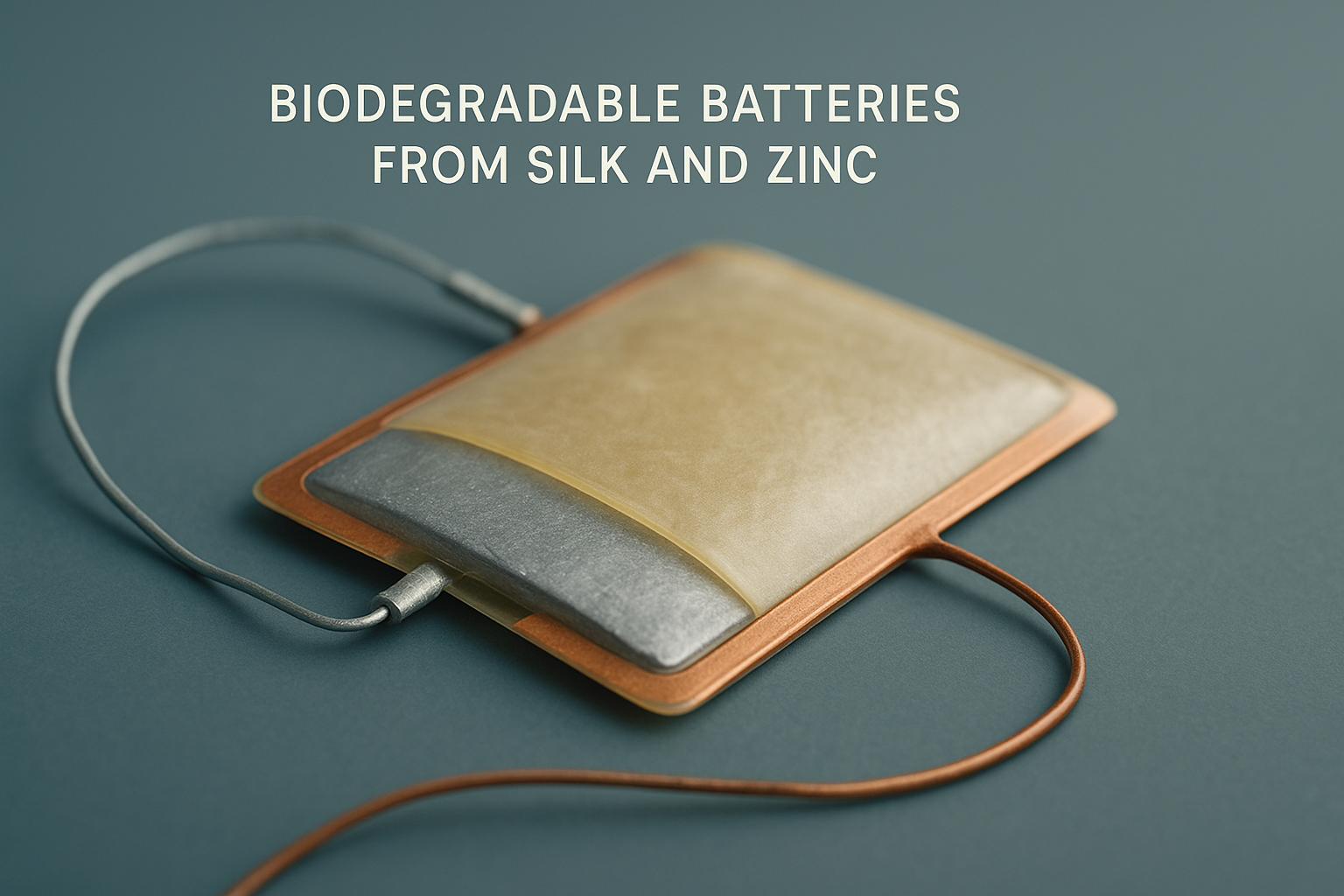
What if your phone battery could power your device — and then safely dissolve in the soil? Enter biodegradable batteries, a breakthrough in sustainable electronics made from materials like silk and zinc.
Traditional lithium-ion batteries pose serious environmental challenges. They require rare earth metals, are difficult to recycle, and can leak toxic chemicals. In contrast, biodegradable batteries are designed to function for a specific time and then harmlessly break down, leaving no harmful trace.
At the heart of this innovation is zinc, a safer and more abundant alternative to lithium, and silk fibroin, a protein derived from silk that acts as a bio-friendly electrolyte or separator. Together, they form batteries that are not only eco-friendly but also flexible, lightweight, and even edible in some medical applications.
These batteries are perfect for temporary electronic devices: health sensors, environmental monitors, and implantable medical tools. For instance, a sensor placed inside the body can operate for a few days and then naturally degrade without surgical removal.
Biodegradable batteries also open new doors for low-impact consumer tech. Imagine a fitness tracker or smart patch that disappears after its useful life, reducing e-waste dramatically.
Current limitations include relatively low energy density and shorter lifespans compared to commercial batteries. However, for short-term or low-power applications, their sustainability edge is unbeatable.
As the world seeks cleaner tech solutions, biodegradable batteries represent a promising step. They align with the future of electronics: smart, safe, and environmentally responsible — down to the last molecule.


