

Energy Harvesting from Human Motion
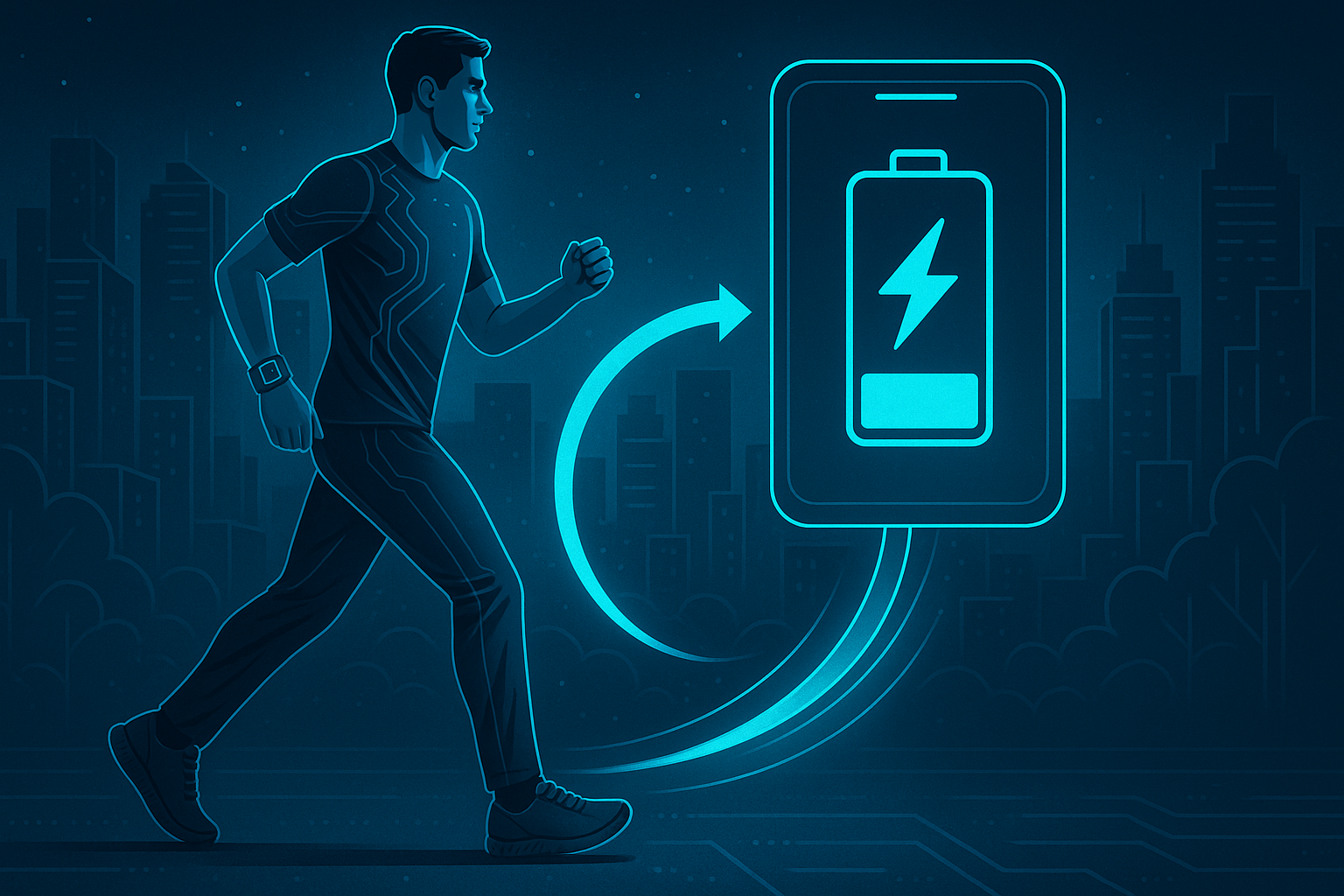
What if every step you took could charge your phone? The concept isn’t far off. Energy harvesting from human motion is an emerging field that turns everyday movement into usable power.
Our bodies are full of kinetic potential. Walking, typing, or even breathing generates mechanical energy. Researchers are now capturing that energy using piezoelectric materials — substances that produce an electrical charge when bent or compressed.
These materials can be embedded in shoes, clothing, or wearables. Imagine a fitness tracker that never needs charging because it powers itself as you move. Or smart insoles that use each step to monitor your gait and also trickle-charge a portable battery.
Beyond consumer tech, this has huge implications for medical devices. Pacemakers or biosensors could be powered internally by the motion of the body, eliminating the need for battery replacements and reducing surgical interventions.
Another exciting area is triboelectric nanogenerators (TENGs), which harvest static electricity from motion — such as fabric rubbing or footfalls — with impressive efficiency.
The goal isn’t to replace large-scale batteries or solar panels, but to complement them in low-power, mobile, or remote applications. Energy-harvesting devices offer autonomy, convenience, and sustainability — especially in areas without reliable electricity.
Challenges include durability, energy storage, and miniaturization, but the momentum is growing. As wearables become smarter and more essential, self-powering systems could unlock a new era of motion-powered tech — charging the future with every move we make.


