Quantum Time Crystals: Breaking Symmetry in the Time Dimension
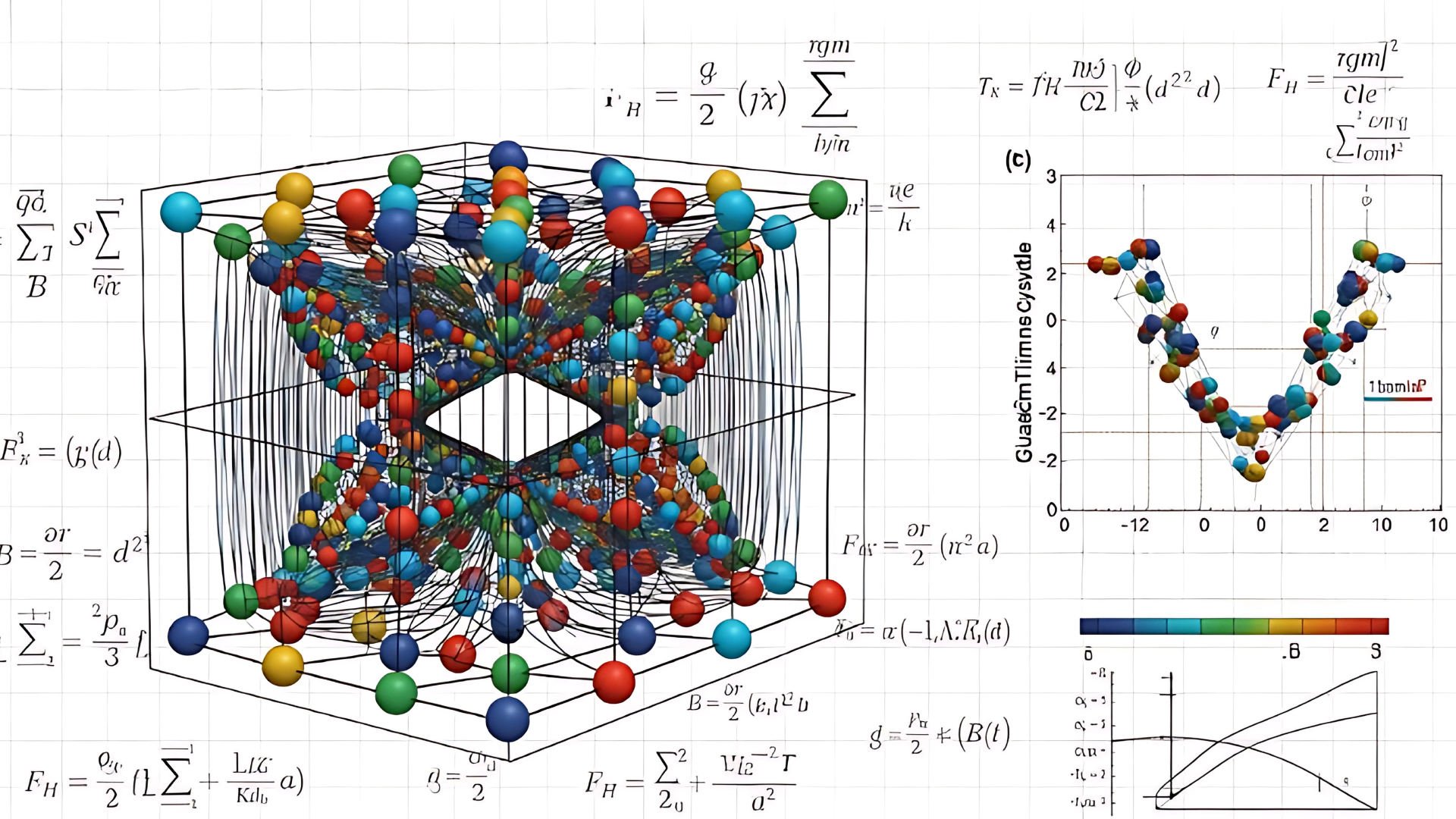
In 2012, Nobel Laureate Frank Wilczek proposed the idea of "time crystals," a phase of matter that breaks time-translation symmetry. For years, the concept seemed like science fiction, but in 2021, physicists at Google and Stanford successfully observed quantum time crystals inside a quantum computer. Unlike regular crystals, which repeat patterns in space, time crystals oscillate in a consistent, periodic manner over time—without consuming energy. This perpetual motion defies traditional thermodynamic understanding and is made possible by carefully engineered systems that operate in closed, quantum environments.
Time crystals are important not just for their strange and beautiful behavior but also for their implications in quantum computing. These structures offer more robust, coherent states that could potentially store information over longer periods. Current research focuses on how these time crystals interact with external fields and whether they can be stabilized in larger systems.
The discovery has reignited interest in non-equilibrium phases of matter. It challenges the foundational assumptions of physics and opens up new opportunities for energy-efficient computing and advanced quantum simulations. Quantum time crystals could pave the way for revolutionary devices, including persistent memory chips and ultra-stable quantum clocks.
This advancement illustrates how abstract theoretical physics can transition into real-world technologies. For students and researchers in physics and astronomy, the study of time crystals offers a bridge between quantum theory, material science, and computer engineering. It’s an emerging field with profound potential—and it’s only just beginning.


