

Reconstructing Ancient Trade Networks with AI
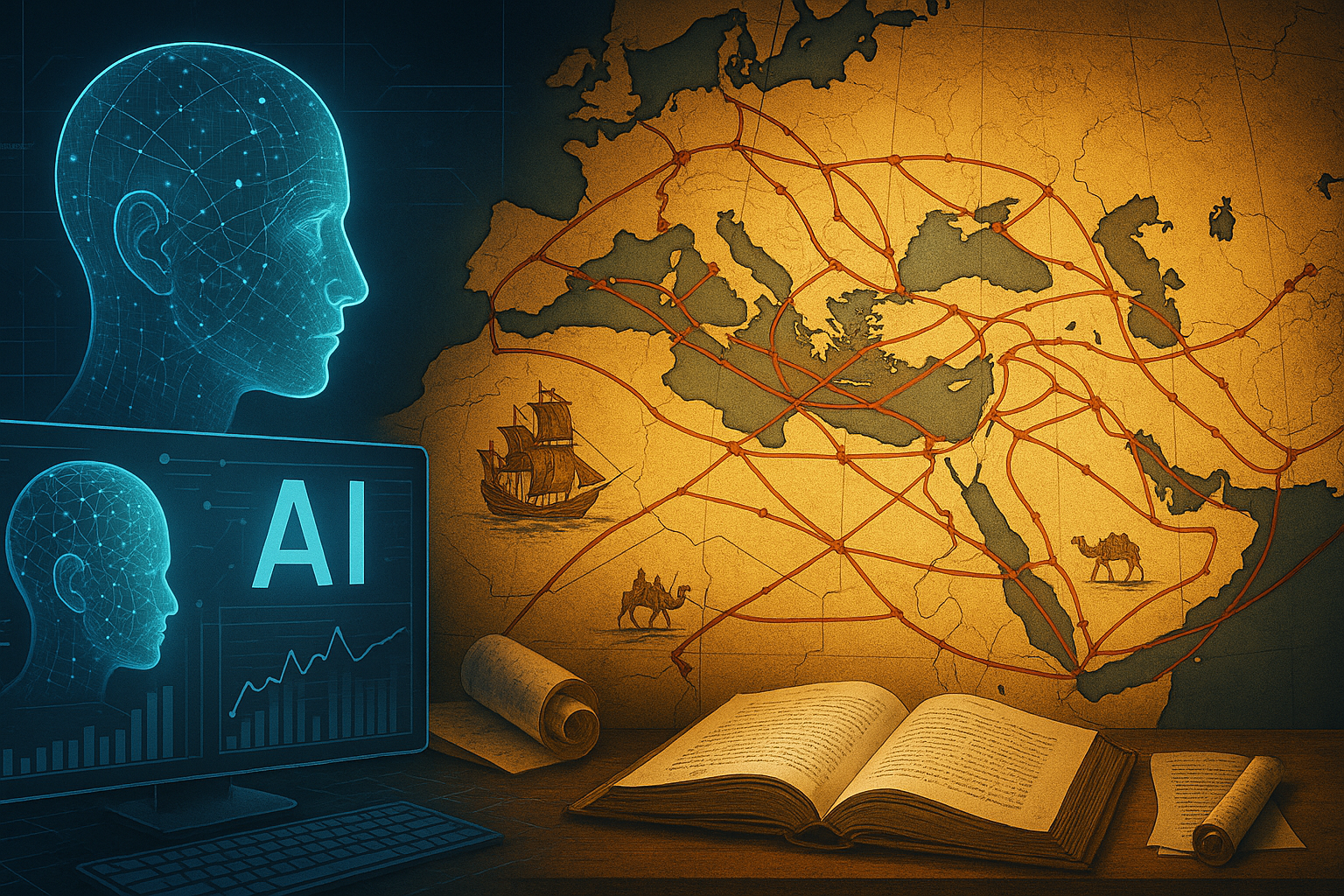
The ancient world was more interconnected than we often assume. From Roman wine in India to Chinese silk in Persia, trade routes crisscrossed continents long before globalization had a name. But how do we map these forgotten networks when written records are sparse or lost? Increasingly, the answer lies in artificial intelligence.
AI is helping archaeologists analyze huge, fragmented datasets — pottery shards, shipwreck logs, isotope readings, and ancient texts — to reconstruct trade patterns. Machine learning can detect correlations that would take human researchers years to spot, such as similarities in artifact compositions across distant sites.
One breakthrough use is analyzing the chemical "fingerprint" of materials like obsidian or amphorae clay. AI can match an artifact's source region, revealing long-distance exchange networks. Combined with geospatial modeling, this allows scholars to simulate how goods, people, and ideas moved across ancient landscapes.
AI is also reviving incomplete records. Natural language processing can decipher and translate old texts or inscriptions, filling gaps in trade documentation. Deep learning can even reconstruct damaged trade maps or decode palimpsests overwritten through time.
The insights go beyond economics. Trade routes were also pathways for religion, art, and technology. Rebuilding these maps gives us a richer, more dynamic view of cultural diffusion.
As AI continues to evolve, we’re not just recovering lost roads and ports — we’re redrawing the world as ancient merchants knew it. History, once a fragmented puzzle, is being reassembled by the algorithms of the future.


