

Self-Healing Concrete and Polymers
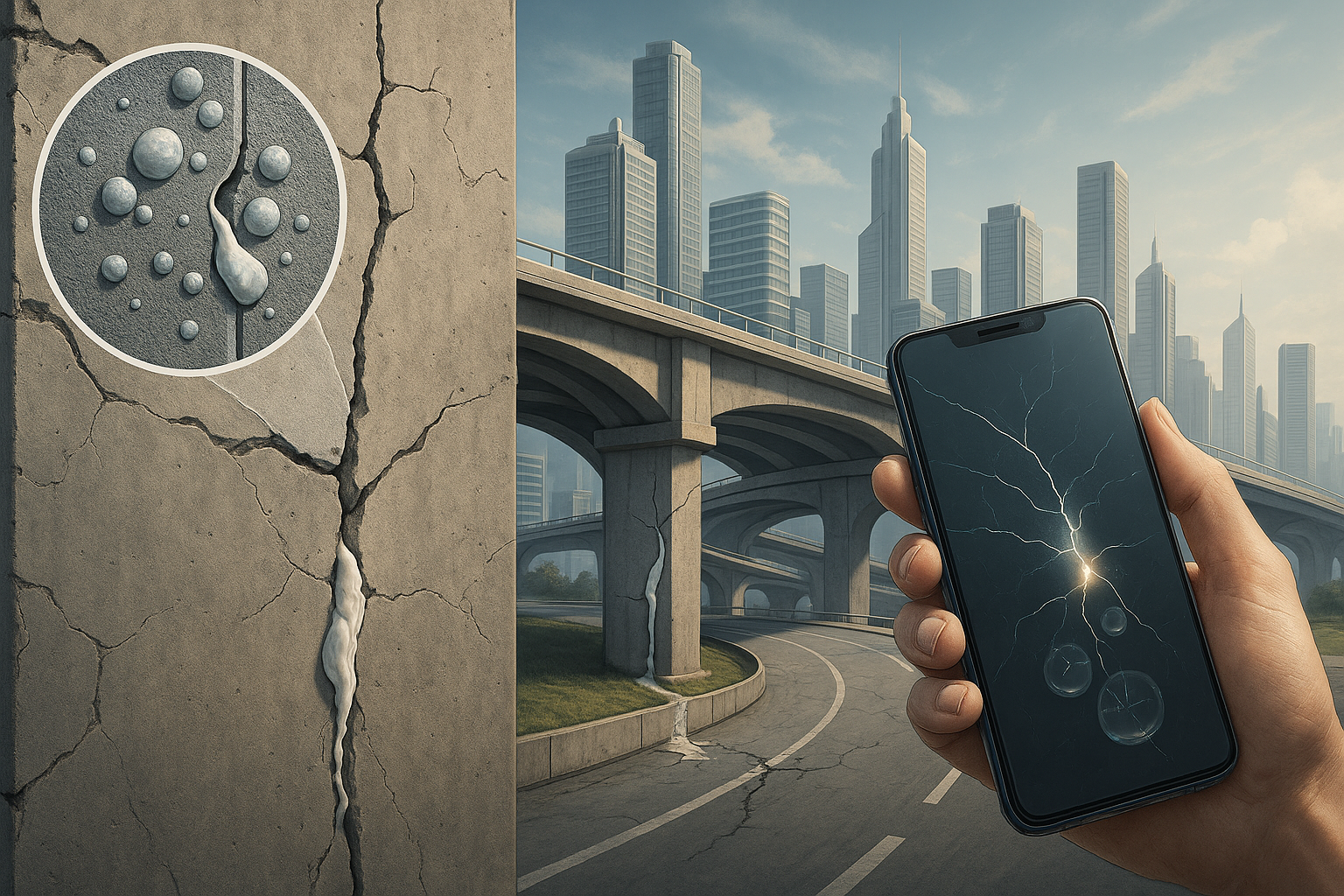
What if buildings could fix their own cracks? Or if your phone case could seal a scratch overnight? Thanks to self-healing materials, this is no longer science fiction. It's a growing reality reshaping the future of infrastructure and consumer products.
Self-healing concrete, for instance, incorporates bacteria or microcapsules filled with healing agents. When cracks form, water enters and activates the bacteria, which produce limestone to fill the gap. Similarly, capsules rupture under stress, releasing a sealant that hardens and repairs the structure.
This innovation dramatically improves the durability and longevity of bridges, tunnels, and roads — reducing maintenance costs and extending lifespans. In earthquake-prone areas, self-healing structures could offer an extra layer of resilience.
On the polymer side, self-healing plastics and rubbers use reversible chemical bonds. These materials can reform broken links at room temperature or when exposed to light or heat. Some can heal multiple times without losing strength.
Applications are wide-ranging: wearable electronics that recover from tears, phone screens that erase scratches, and automotive coatings that eliminate chips. In aerospace, self-healing materials could reduce inspection time and prevent catastrophic failures.
The tech still has room to grow — especially in scaling up from lab to market, balancing healing time with material strength, and ensuring long-term stability.
But as these materials mature, we move closer to a world where damage isn’t permanent — it’s temporary and fixable by design.


