

AI Predicts Volcanic Eruptions
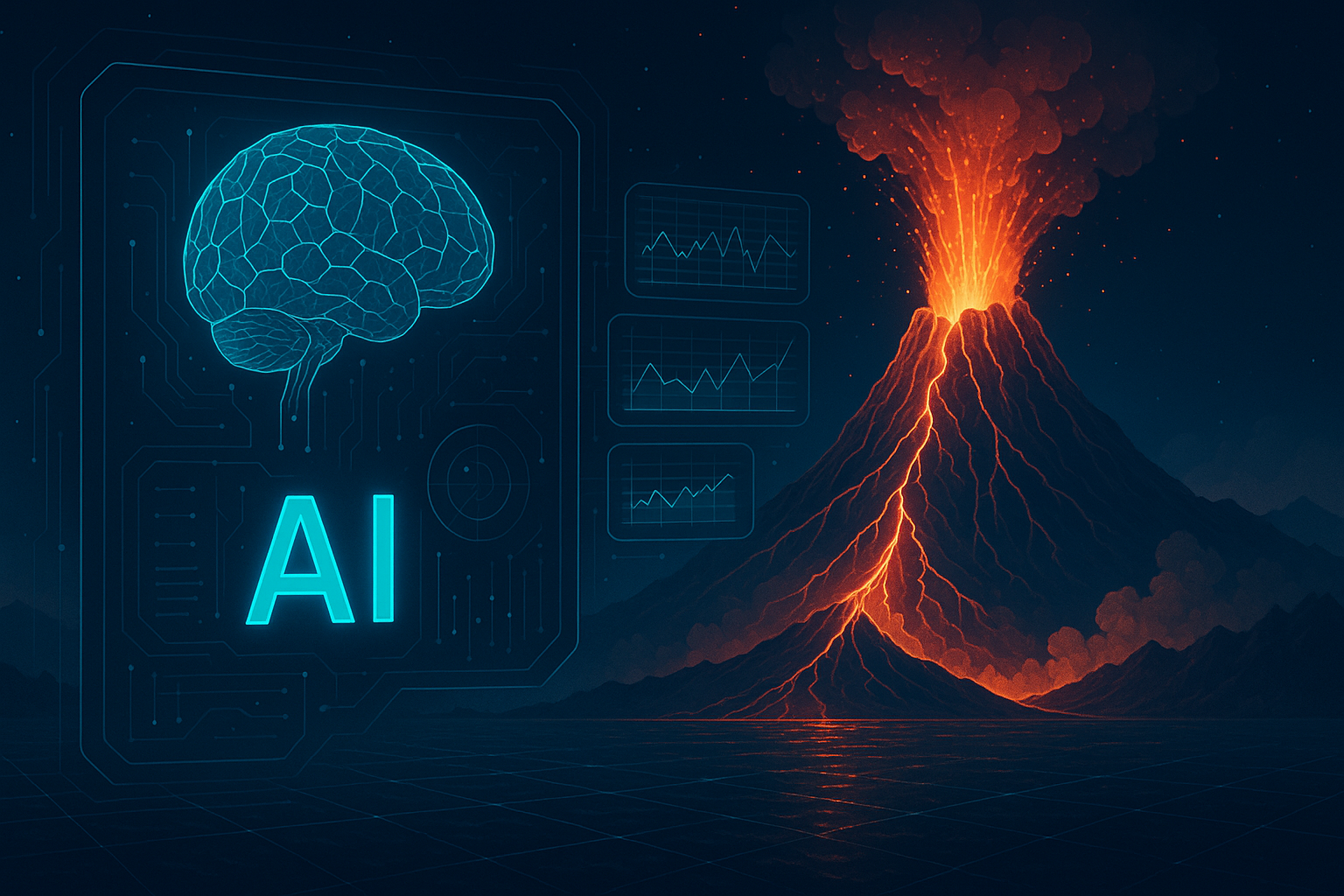
Volcanoes are among Earth’s most unpredictable forces — beautiful, terrifying, and often deadly. But artificial intelligence (AI) is starting to make them more understandable. By analyzing seismic signals, gas emissions, and satellite imagery, AI models are learning to detect eruption precursors with remarkable accuracy.
Traditional volcano monitoring involves human experts interpreting vast amounts of data: tremors, ground deformation, thermal shifts. It’s labor-intensive and, sometimes, too slow to give timely warnings. AI changes the game. Machine learning algorithms can scan years of volcanic behavior, spotting patterns invisible to the naked eye.
One breakthrough came from feeding seismic data into deep learning models. These AIs learned to recognize the "fingerprints" of magma movement deep underground — hours or even days before eruptions. At Mount Etna, AI has correctly identified pre-eruption signals weeks in advance.
AI also excels at integrating multiple data streams. It can fuse satellite heat signatures, gas emission trends, and tilt measurements to create dynamic risk forecasts. In places like Indonesia or Japan, where populations live near active volcanoes, this is a potential lifesaver.
The technology isn't perfect. Each volcano has a unique "personality," and AI models must be trained for local conditions. False positives or missed events still occur, which is why AI is used alongside — not instead of — human volcanologists.
Still, the potential is huge. As data grows and models improve, we may one day have global early-warning systems powered by intelligent algorithms. In the shadow of volcanoes, AI offers not just insight, but a vital edge in disaster preparedness.


