

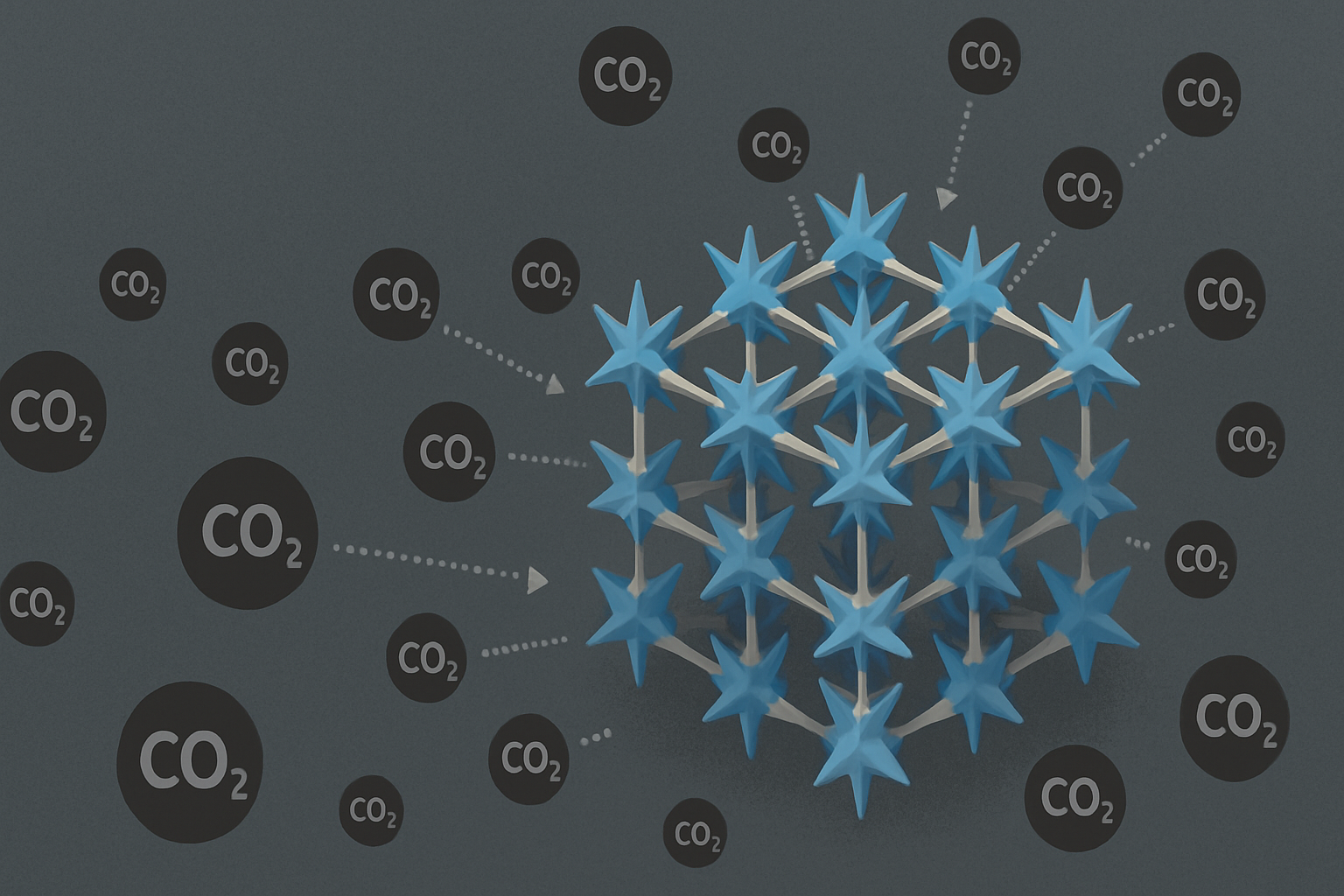
As the climate crisis intensifies, carbon capture technology is gaining attention. One of the most promising tools in this domain is a class of materials known as porous crystals—specifically, metal-organic frameworks (MOFs).
MOFs are crystalline compounds composed of metal ions linked by organic molecules, forming vast networks with enormous surface areas. Their unique structure allows them to trap gases selectively, making them ideal for capturing CO2 from power plants, air, or even ocean water.
Unlike conventional carbon capture methods that often consume large amounts of energy, MOFs can be tailored to operate under milder conditions, reducing energy costs and environmental impact. Recent advances have improved their stability and recyclability, bringing them closer to commercial viability.
These porous crystals represent a powerful intersection of materials science and climate engineering. By trapping greenhouse gases efficiently, MOFs could play a pivotal role in transitioning to a low-carbon future. They don’t just store carbon—they help us reclaim our climate.


