

Green Chemistry and Zero-Waste Labs: Redefining the Future of Scientific Practice
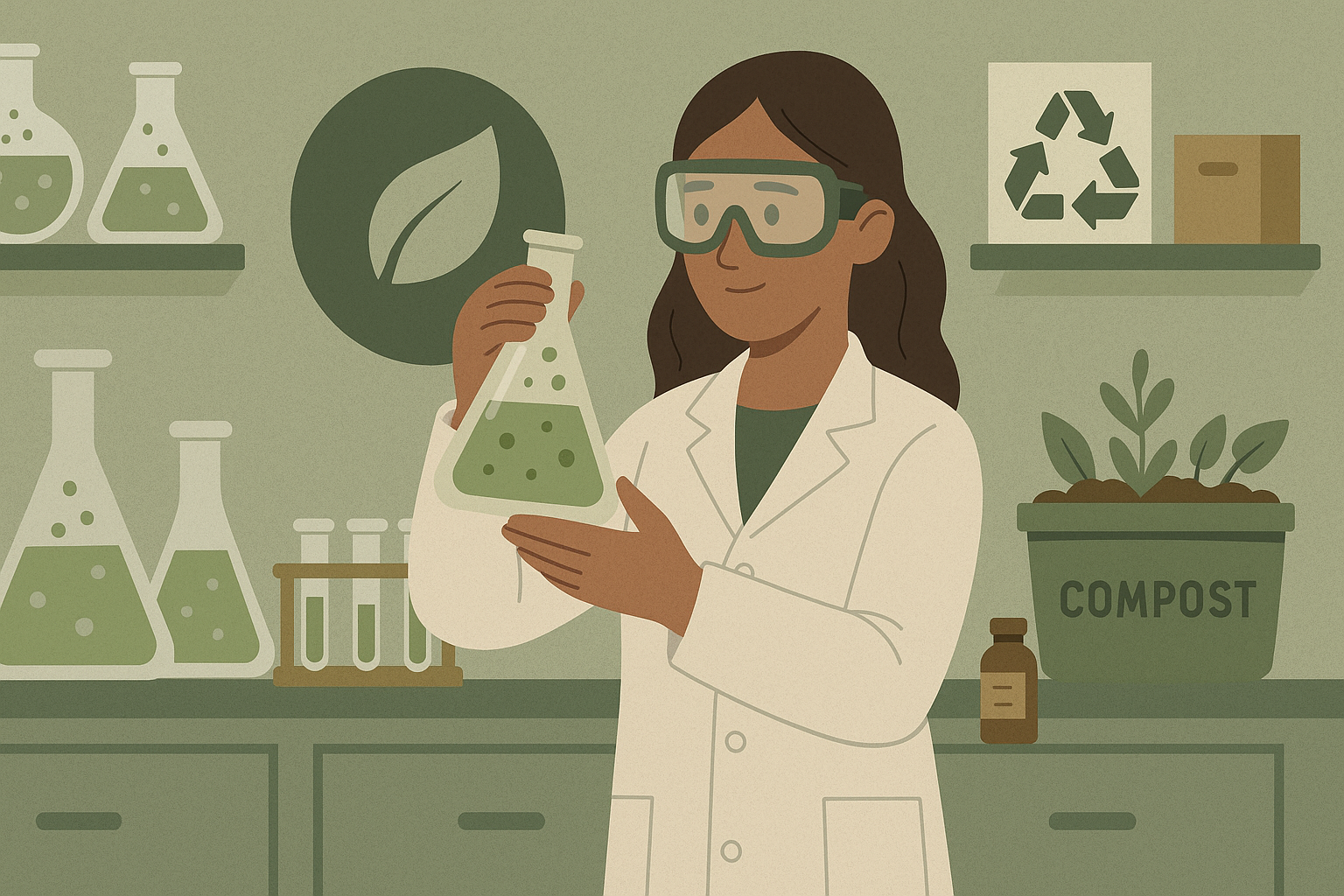
Chemistry has long been the engine of innovation — driving advances in medicine, materials science, agriculture, and technology. But with great power comes great responsibility. As the global community grows increasingly aware of the environmental and health consequences of industrial activity, the role of green chemistry has moved from the margins to the mainstream. We are no longer content with cleaning up pollution after the fact. Instead, we are learning to design molecules, reactions, and laboratories that are clean, efficient, and sustainable from the start.
Green chemistry, often described as the “molecular-level redesign of our chemical future,” is rooted in 12 core principles that guide researchers in minimizing the use and generation of hazardous substances. These principles touch every stage of the chemical lifecycle — from sourcing feedstocks to manufacturing processes, waste management, and final product disposal. The ultimate aim? To transform chemistry from a potentially harmful enterprise into a force for environmental restoration and resilience.
The Emergence of Zero-Waste Laboratories
A particularly inspiring evolution in this field is the rise of the zero-waste chemistry laboratory. In these pioneering spaces, researchers go beyond reducing waste — they work toward eliminating it entirely. This is not just about recycling solvents or using fewer toxic reagents. It’s a systemic reimagining of how chemistry is practiced:
Solvent recovery systems now allow researchers to reuse high-purity solvents multiple times, reducing the need for virgin chemical stocks.
Microscale reaction platforms, often integrated with automated AI-powered optimization tools, ensure minimal reagent consumption while maximizing yield and efficiency.
Renewable feedstocks, such as plant-based oils, sugars, and even CO₂, are replacing petroleum-based inputs in the synthesis of fuels, plastics, and fine chemicals.
Waste is not merely managed — it is viewed as a resource. Reaction byproducts are analyzed for potential reuse or transformation into value-added compounds.
In leading research institutions, zero-waste protocols are now being built into grant frameworks, lab planning, and even architectural design — incorporating closed-loop water systems, energy-efficient lighting, and green-certified materials.
Real-World Innovations: From Lab Bench to Industry
Green chemistry isn’t just a theoretical framework confined to academic journals. Its principles are actively shaping industrial practice:
Biodegradable polymers, designed to break down into harmless byproducts, are being used in packaging, agriculture, and even biomedical devices.
Solvent-free and mechanochemical synthesis techniques are emerging as powerful tools in pharmaceuticals and materials research — achieving high selectivity without the need for dangerous solvents.
Bio-catalysts and enzyme mimics, which operate under mild conditions and generate minimal waste, are replacing traditional metal catalysts that can be expensive, rare, and environmentally damaging.
Photocatalysis and electrochemical synthesis are enabling new pathways for making complex molecules using light and electricity, reducing reliance on harsh reagents.
Companies that adopt green chemistry aren’t just protecting the environment — they’re finding economic and strategic advantages, including reduced regulatory burden, lower waste disposal costs, and growing consumer demand for sustainable products.
A Cultural Shift in Chemical Education
Equally transformative is the shift in chemical education. Universities and high schools are embedding green chemistry into their curricula, replacing outdated experiments that use heavy metals and corrosive acids with greener, safer protocols. Students are learning not only how to conduct a reaction, but how to think holistically about its impact on human health, ecosystems, and future generations.
This educational shift fosters a mindset of scientific responsibility — where the goal is not just to discover or synthesize, but to do so ethically and sustainably. The chemist of the future will be a steward of the Earth as much as a manipulator of molecules.
The Path Forward: Chemistry That Heals the Planet
Green chemistry and zero-waste labs are more than trends — they represent a paradigm shift in how science serves society. By aligning chemistry with ecological and ethical imperatives, we are moving toward a future where every experiment not only minimizes harm but actively contributes to healing the planet.
In this way, the laboratory becomes not just a site of discovery, but a model for sustainability, where innovation and conservation go hand in hand.
As a chemist, I believe this is the essence of our craft at its highest level: to understand matter deeply, and to use that understanding not to dominate nature, but to live in harmony with it.


