

Dark Matter Mapping with AI: The Universe Unveiled
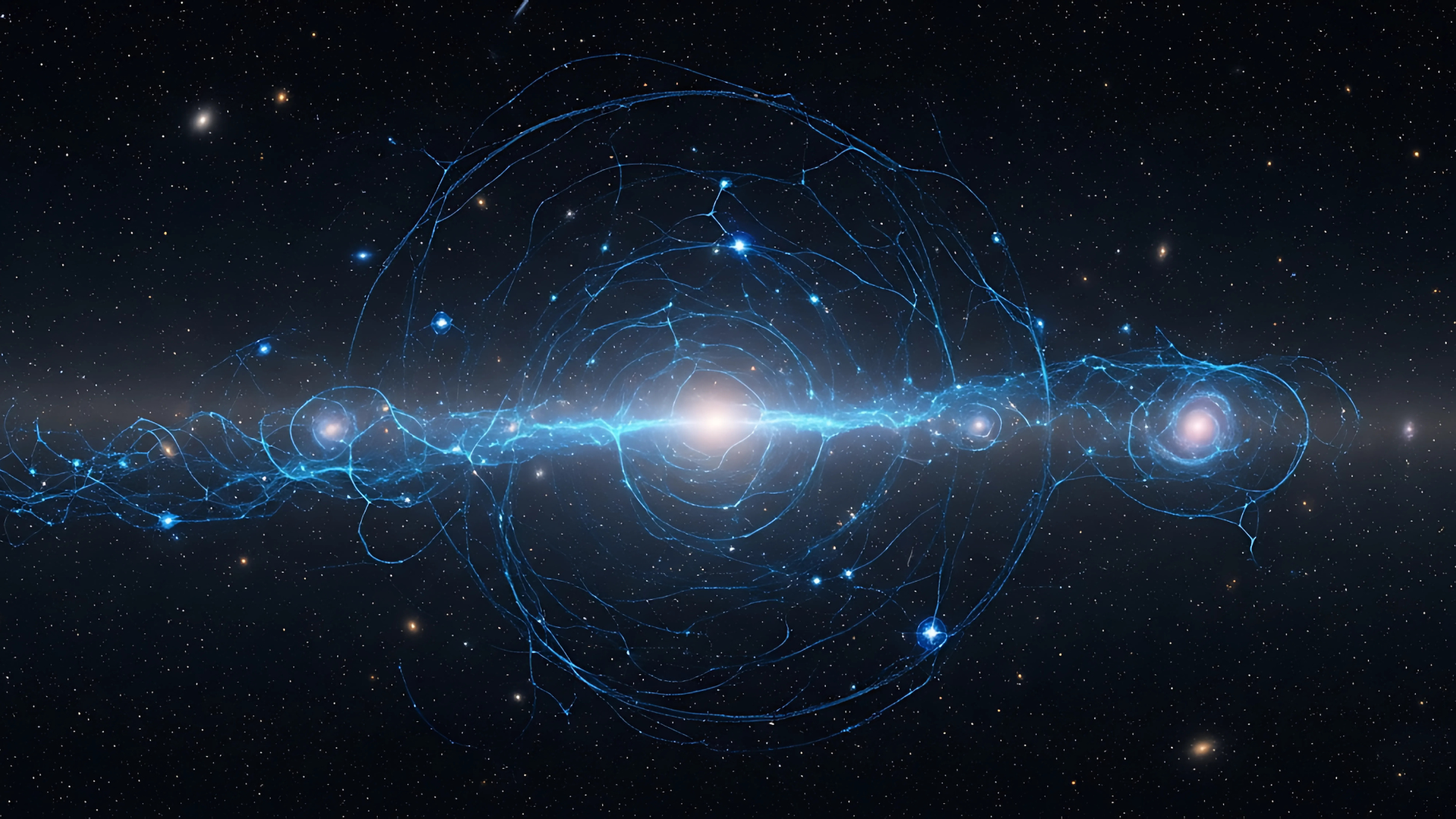
For decades, dark matter has remained one of the most elusive elements of our universe. Comprising roughly 27% of the universe, it doesn’t emit, absorb, or reflect light, making it invisible to conventional telescopes. Scientists have traditionally relied on the gravitational effects of dark matter on visible matter to study its presence. However, recent advancements in artificial intelligence have opened new doors in dark matter research.
Using AI models trained on gravitational lensing data—where massive objects like galaxies bend the light of objects behind them—astronomers can now more accurately map the distribution of dark matter across the cosmos. Tools like convolutional neural networks (CNNs) analyze astronomical images at a speed and scale that human scientists cannot match, revealing dark matter structures hidden within vast data sets.
One significant breakthrough came from the Dark Energy Survey and the application of machine learning to analyze cosmic shear. The results allowed researchers to chart unseen dark matter filaments connecting galaxy clusters, validating long-standing theoretical models of cosmic web structure. These tools are not just helping us understand where dark matter is, but also how it influences galaxy formation and cosmic expansion.
This intersection of astrophysics and AI represents a monumental shift in how we study the universe. By leveraging big data and machine learning, scientists are peeling back layers of the cosmos that have remained inaccessible for generations. For students interested in both data science and space science, this field offers exciting interdisciplinary opportunities with transformative potential.


