

Forensic History: Solving Royal Cold Cases
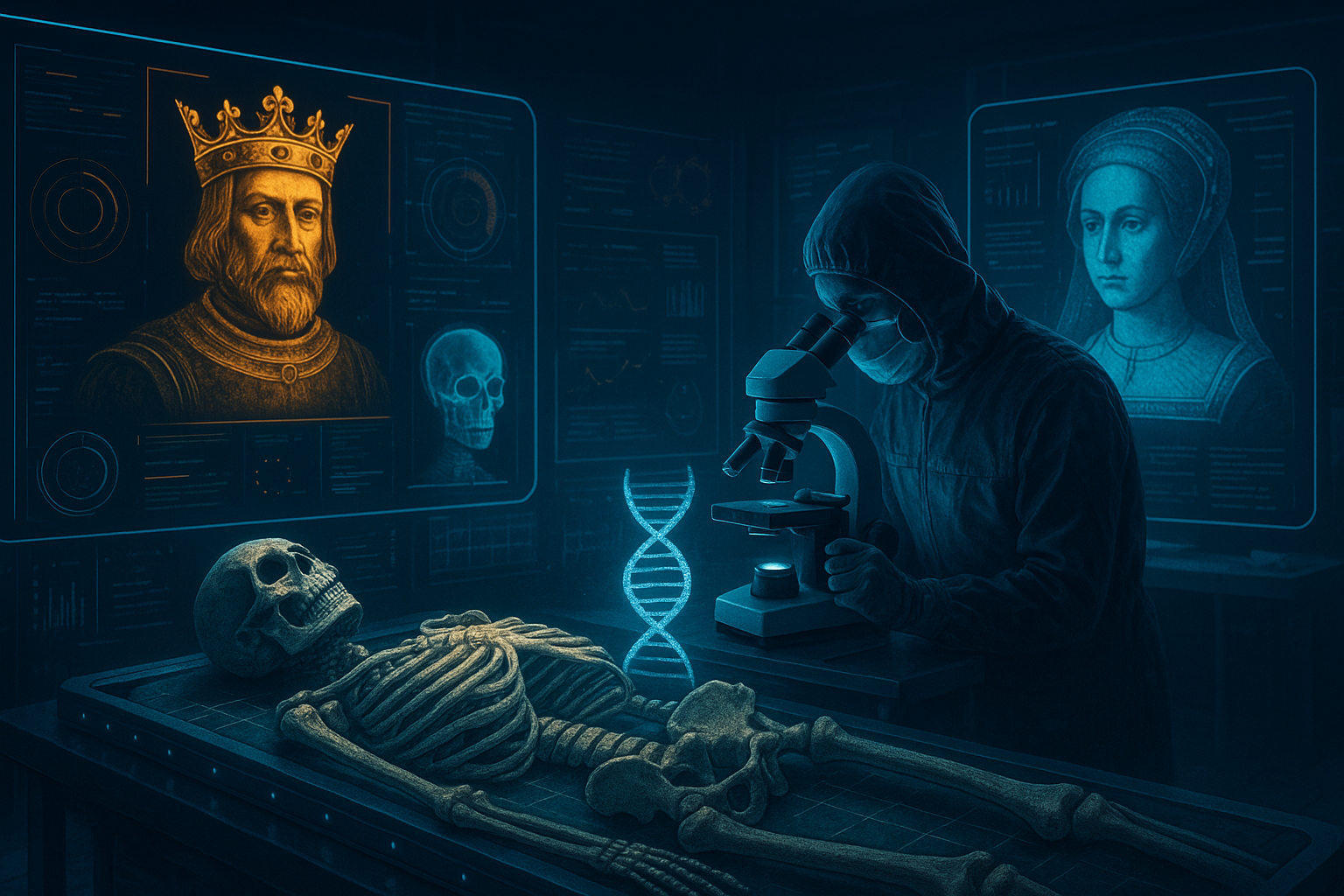
History is full of mysteries — kings who vanished, queens who may have been murdered, battles with unclear outcomes. Today, modern forensics is breathing new life into these cold cases, using techniques from crime labs to solve royal puzzles centuries old.
Take the case of Richard III. Long believed to be a villain, his remains were discovered under a parking lot in Leicester in 2012. DNA analysis confirmed his identity, while skeletal forensics revealed battle wounds and scoliosis, reshaping his historical image.
Other investigations use isotope analysis to trace royal diets or travel patterns. For example, studies of ancient teeth can reveal where a prince grew up, or whether a noblewoman was poisoned. Carbon dating, CT scans, and facial reconstruction techniques help decode burial sites and lost identities — like the “Princesses in the Tower,” whose fate remains contested.
More recently, mitochondrial DNA was used to link distant descendants to royal lineages, clearing up succession disputes and uncovering hidden affairs. Sometimes, history’s “official” version unravels in the lab.
This merging of science and history also raises ethical questions. Should ancient remains be exhumed for curiosity? What rights do historical figures have to privacy?
Still, forensic history has transformed archives into crime scenes, and scholars into detectives. It doesn’t just rewrite textbooks — it reshapes how we see the past, revealing that beneath myth and monument lie very real, very human stories waiting to be told.


