

Geoengineering with Reflective Aerosols
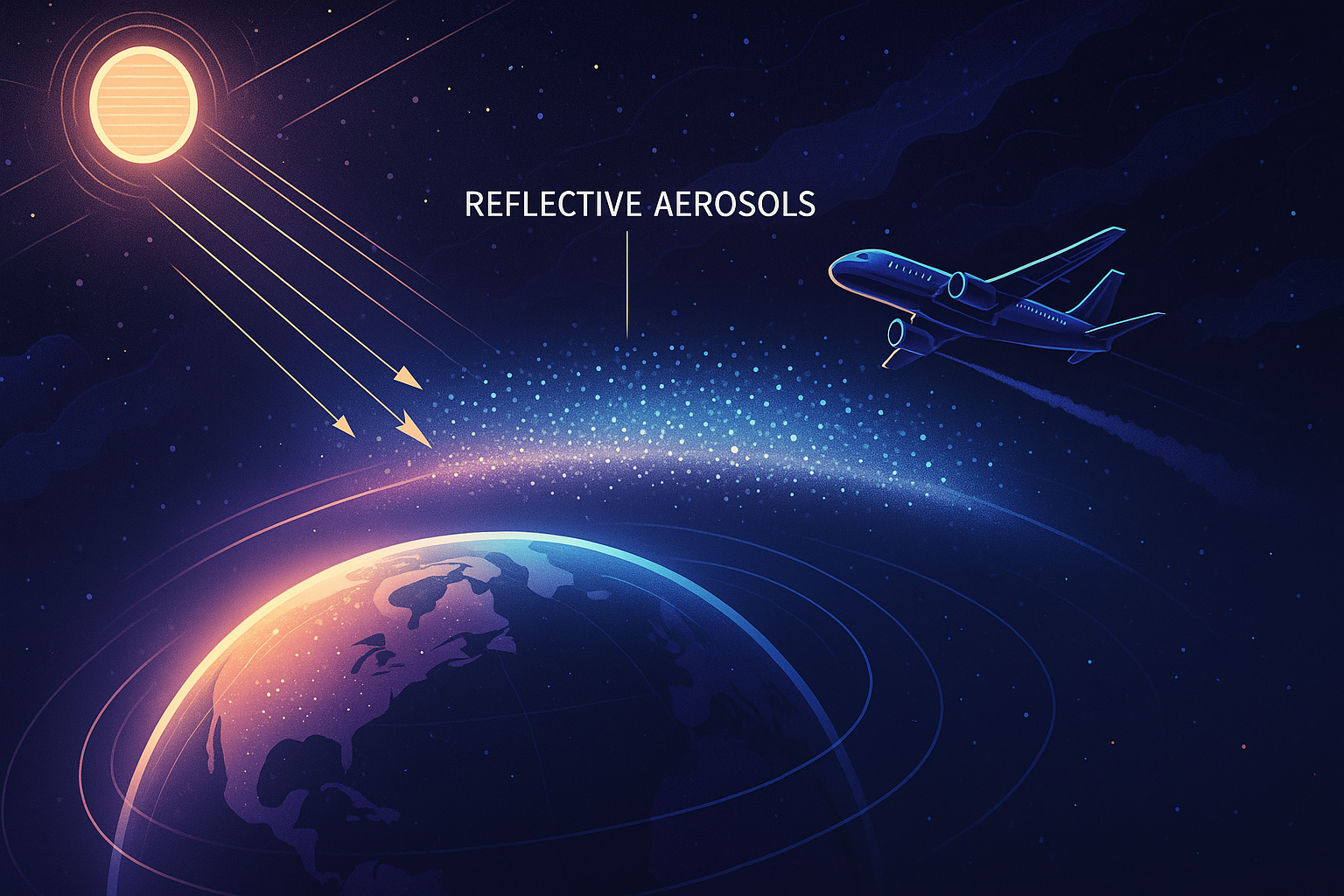
As global warming accelerates, scientists are exploring radical ideas to cool the planet. One of the most controversial is solar geoengineering — specifically, spraying reflective aerosols into the stratosphere to bounce sunlight back into space. It’s a concept both promising and fraught with uncertainty.
Inspired by volcanic eruptions (which naturally cool the planet), this method would inject sulfate particles or engineered alternatives high into the atmosphere. These aerosols scatter incoming solar radiation, potentially reducing Earth’s average temperature within months.
Proponents argue it could "buy time" — slowing climate impacts while we transition to cleaner energy. Some models suggest it might reduce global temperatures by as much as 1.5°C. It’s relatively low-cost, fast-acting, and technically feasible with existing aircraft.
But the risks are serious. Stratospheric aerosols could disrupt rainfall patterns, particularly in vulnerable regions like sub-Saharan Africa or South Asia. There's also the danger of "termination shock": if spraying stops suddenly, temperatures could rebound faster than ecosystems or economies can handle.
Another concern is governance. Who decides if, when, and how to launch such a global intervention? Without international consensus, unilateral action could spark geopolitical tensions.
Some researchers are calling for small-scale trials and global oversight frameworks. Others warn that even testing could normalize the idea, reducing pressure for carbon reduction — a “moral hazard” in disguise.
Ultimately, reflective aerosols are not a fix, but a stopgap. They treat the symptom, not the cause. Still, in a world inching toward climate tipping points, they may soon shift from taboo to table talk. The sky, quite literally, could be our new battleground.


