

Hyperloop Engineering and the Future of Transit
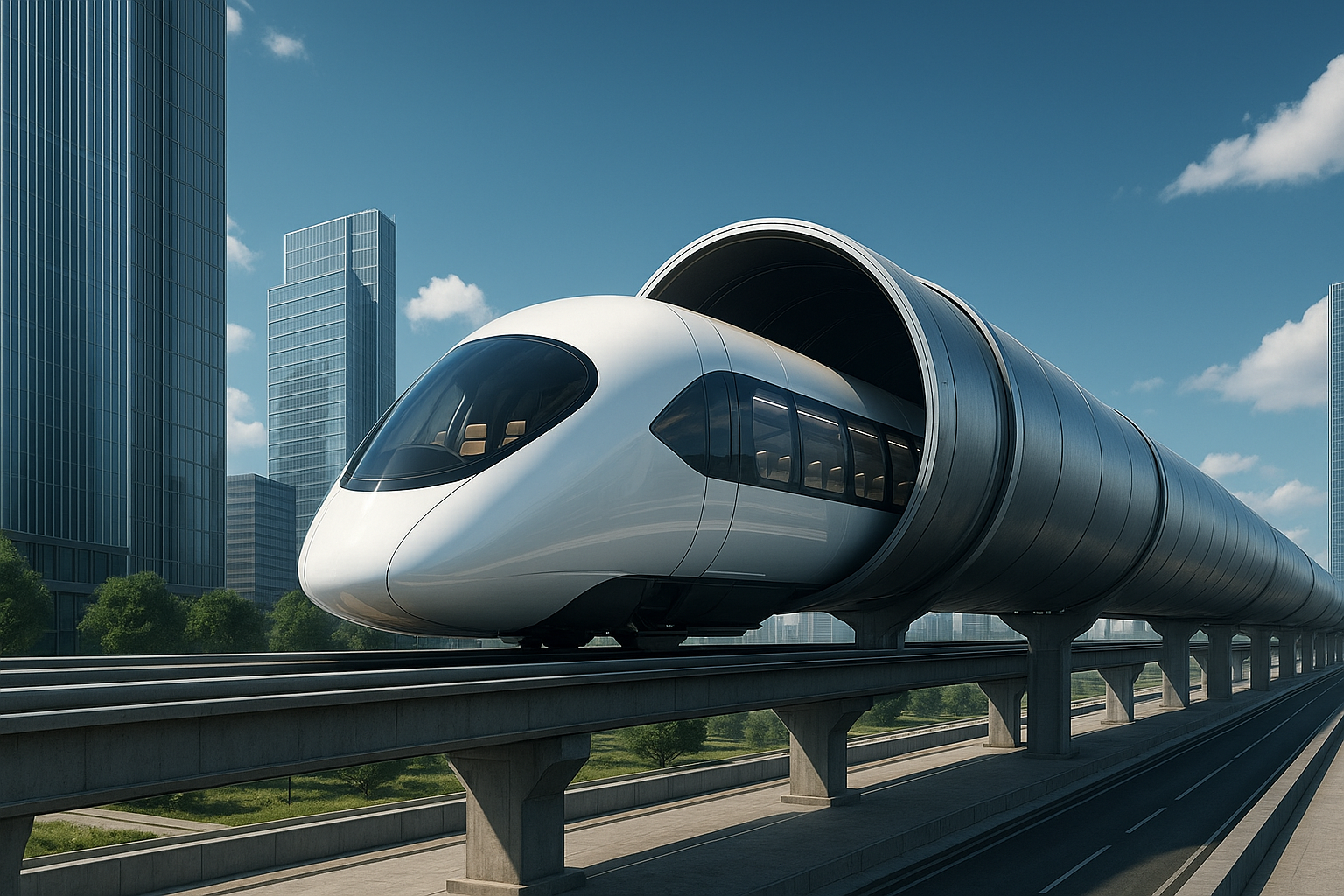
Imagine zipping between cities at 700 mph — faster than planes, but on the ground. That’s the promise of the Hyperloop, a futuristic transport system that’s more than a concept: it’s a feat of cutting-edge engineering.
The Hyperloop works by propelling pods through low-pressure tubes, drastically reducing air resistance and allowing near-supersonic speeds. Magnetic levitation (maglev) or air-bearing technologies eliminate friction, while linear electric motors provide acceleration.
The result? Ultra-fast, energy-efficient, and low-noise travel. A trip from Los Angeles to San Francisco could take just 30 minutes.
Engineering challenges are massive. Maintaining vacuum conditions over hundreds of miles, ensuring safety at extreme speeds, and managing thermal expansion in tubes are just the start. Yet, startups like Virgin Hyperloop and Hardt have already built test tracks and successfully demonstrated levitating pods.
Hyperloop infrastructure could run above or below ground, and stations would resemble modern airports. Unlike traditional rail, it’s modular and scalable, potentially cheaper in the long run thanks to fewer moving parts and reduced maintenance.
Besides speed, Hyperloop is eco-friendly, with low energy use and the ability to run on renewables. It could reshape regional economies, reduce air travel emissions, and redefine what a “commute” means.
The vision is bold, but if realized, Hyperloop will represent one of the most transformative transport breakthroughs since the jet engine — making near-instantaneous, green mobility a reality.


