

Mars Habitats: Engineering for Other Worlds
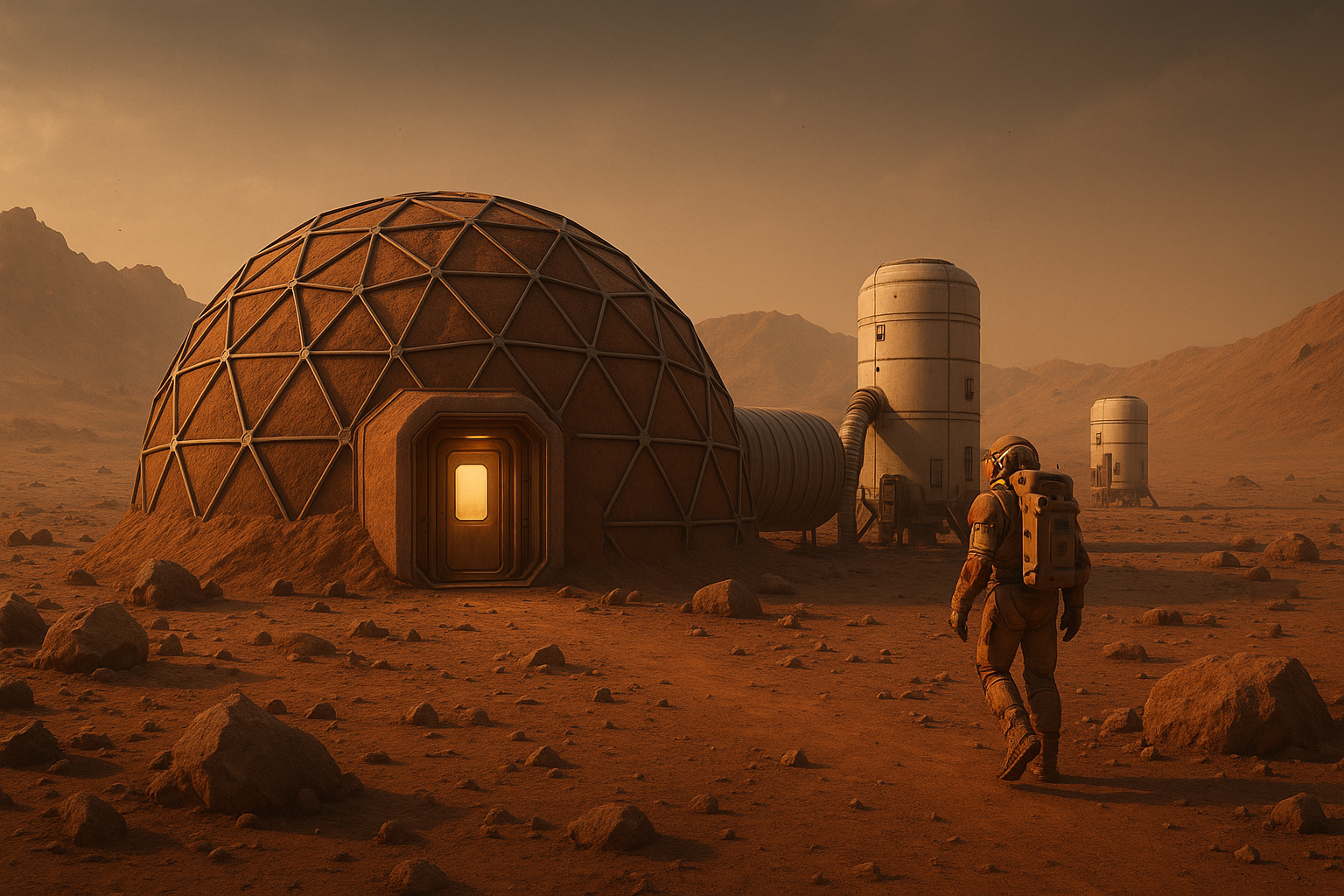
Designing homes on Earth is challenging enough — now imagine doing it on Mars, a planet with intense radiation, dust storms, and no breathable air. Yet, scientists and engineers are hard at work creating Mars habitats, the future homes of astronauts exploring or colonizing the Red Planet.
The biggest challenges? Radiation shielding, temperature extremes, and self-sufficiency. Without Earth’s magnetic field, Mars exposes settlers to harmful cosmic rays. One solution is building habitats underground or using regolith — Martian soil — to shield structures.
Another approach is inflatable or modular habitats delivered from Earth and assembled on-site. Some designs even involve 3D-printing structures using Martian materials, reducing reliance on Earth-based resupply missions.
Inside, these habitats must support life: air recycling, water purification, food production, and energy generation — all in a closed loop. Engineers are developing bioregenerative systems, hydroponic farms, and compact nuclear reactors to meet these needs.
Mars habitats are more than futuristic homes; they are the ultimate testbeds for sustainability. Innovations developed here could also transform living in extreme environments on Earth — deserts, polar regions, or even disaster zones.
As we inch closer to interplanetary travel, Mars habitats remind us that engineering isn’t just about infrastructure — it’s about survival, adaptation, and imagination.


