

Magnetars and the Brightest Cosmic Flashes Ever Detected
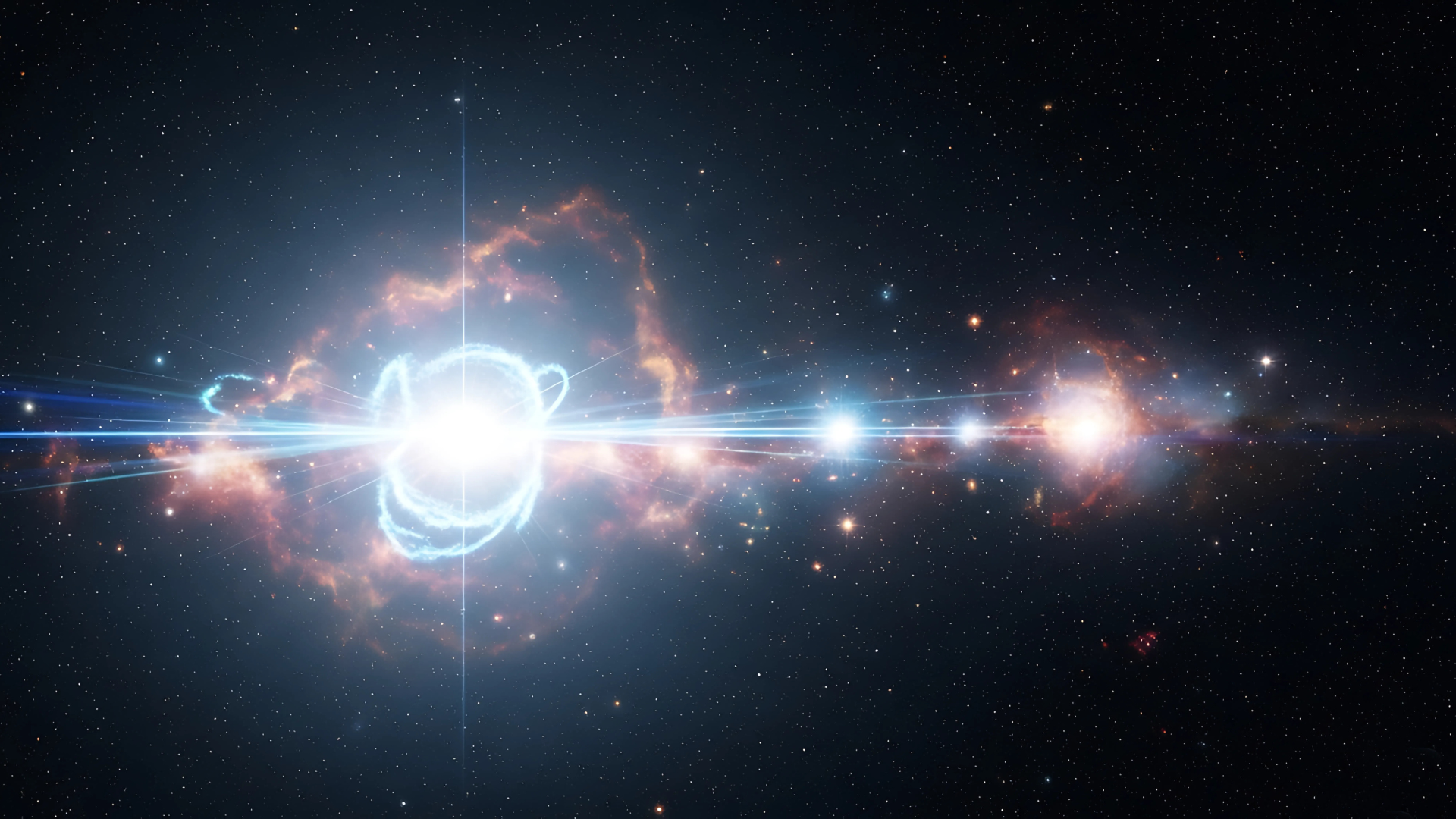
Magnetars are a rare and exotic type of neutron star with magnetic fields a trillion times stronger than Earth’s. These celestial objects, formed from supernova remnants, can unleash massive bursts of gamma rays and X-rays, making them some of the brightest and most energetic objects in the universe. In recent years, magnetars have drawn increasing attention for their potential connection to fast radio bursts (FRBs)—mysterious, high-energy pulses detected from deep space.
One of the most significant breakthroughs came in 2020, when an FRB was traced back to a known magnetar within our galaxy, confirming a long-suspected link. This discovery has opened new avenues of research into the origins of FRBs, which had previously been attributed to everything from colliding black holes to alien civilizations.
Magnetars also offer insights into the fundamental laws of physics. Their extreme magnetic fields distort spacetime and provide natural laboratories for testing theories of quantum gravity and nuclear physics. Observations of magnetars using space-based telescopes like NASA’s NuSTAR and ESA’s XMM-Newton are helping scientists probe the behavior of matter under conditions that cannot be replicated on Earth.
The study of magnetars is expanding our understanding of stellar evolution, magnetic field generation, and the dynamics of extreme environments. For students of astrophysics and cosmology, these neutron stars represent an electrifying field of research with deep implications for the future of space science. They challenge our current models and invite new theories, making them a hot topic for discovery and innovation.


