

Ocean Acidification Sensors at Micron Scale
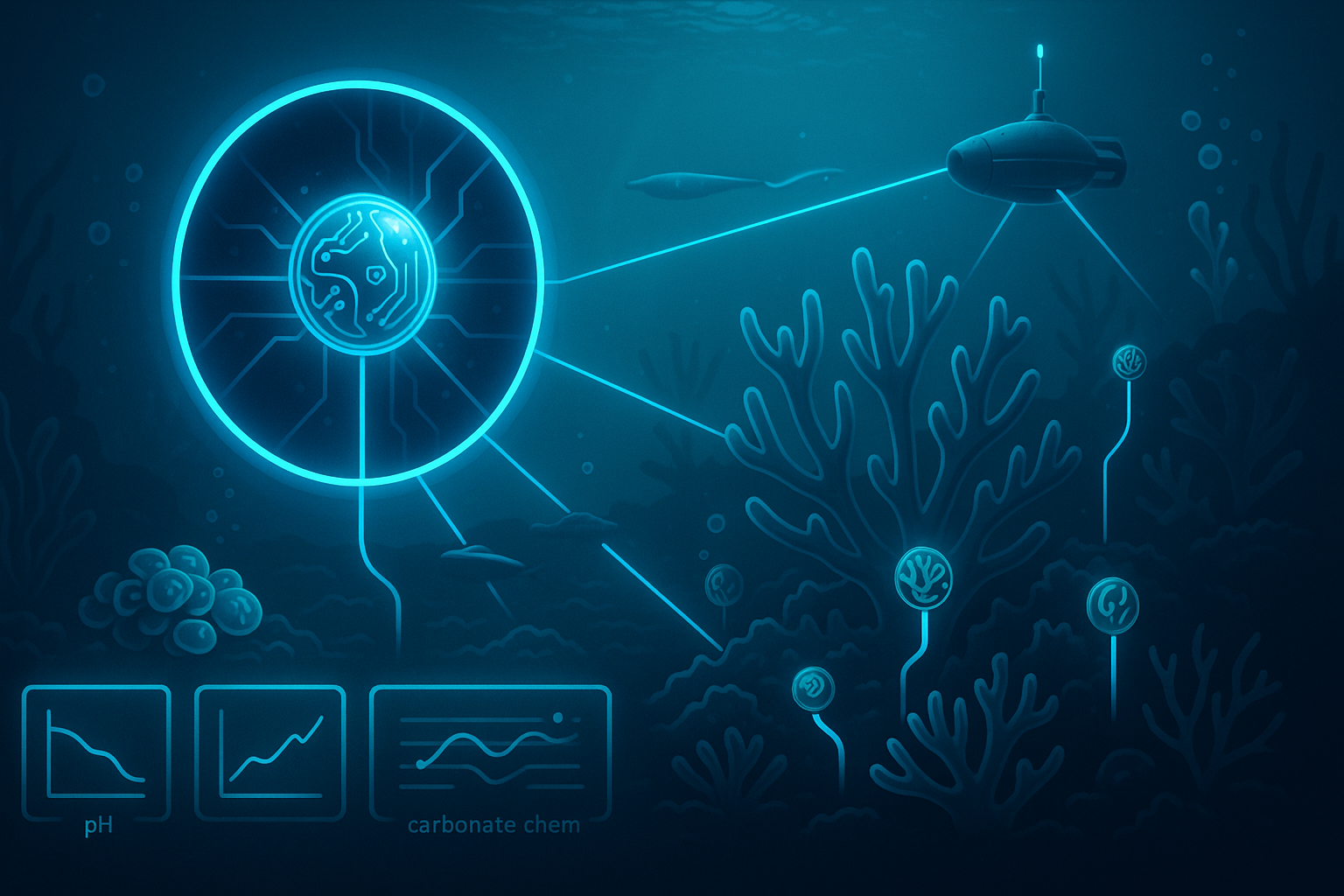
Ocean acidification — the silent cousin of climate change — is rapidly altering marine ecosystems. Caused by increased CO₂ absorption, it lowers the pH of seawater, threatening coral reefs, shellfish, and plankton. But until recently, our ability to monitor these changes has been coarse and slow. Enter micron-scale sensors: tiny, ultra-sensitive devices that are transforming how we study the sea.
These sensors, sometimes as small as a grain of sand, can be deployed on floating buoys, autonomous drones, or even within marine organisms themselves. Unlike traditional instruments, they measure pH, temperature, and carbonate chemistry at the micro-habitat level — offering unprecedented resolution.
Why does that matter? Because acidification isn't uniform. A coral reef, a kelp forest, or a tide pool can each experience vastly different chemical changes depending on currents, photosynthesis, and nearby pollution. Micron-scale sensors reveal these local variations, helping scientists pinpoint high-risk areas or identify natural refuges.
Moreover, real-time data from these sensors feeds into global models, improving forecasts for fisheries and conservation efforts. When coupled with AI, patterns emerge that humans might miss — such as subtle chemical shifts before mass coral bleaching events.
But challenges remain: battery life, data transmission, and biofouling (marine growth on sensors) can limit long-term use. Yet the field is evolving fast, with bio-inspired coatings and energy-efficient circuits extending deployment times.
Ultimately, these miniature devices are giving voice to ecosystems previously too small or remote to be heard. In the race to understand and mitigate ocean acidification, every micrometer counts.


