

Self-Learning Robots in Manufacturing
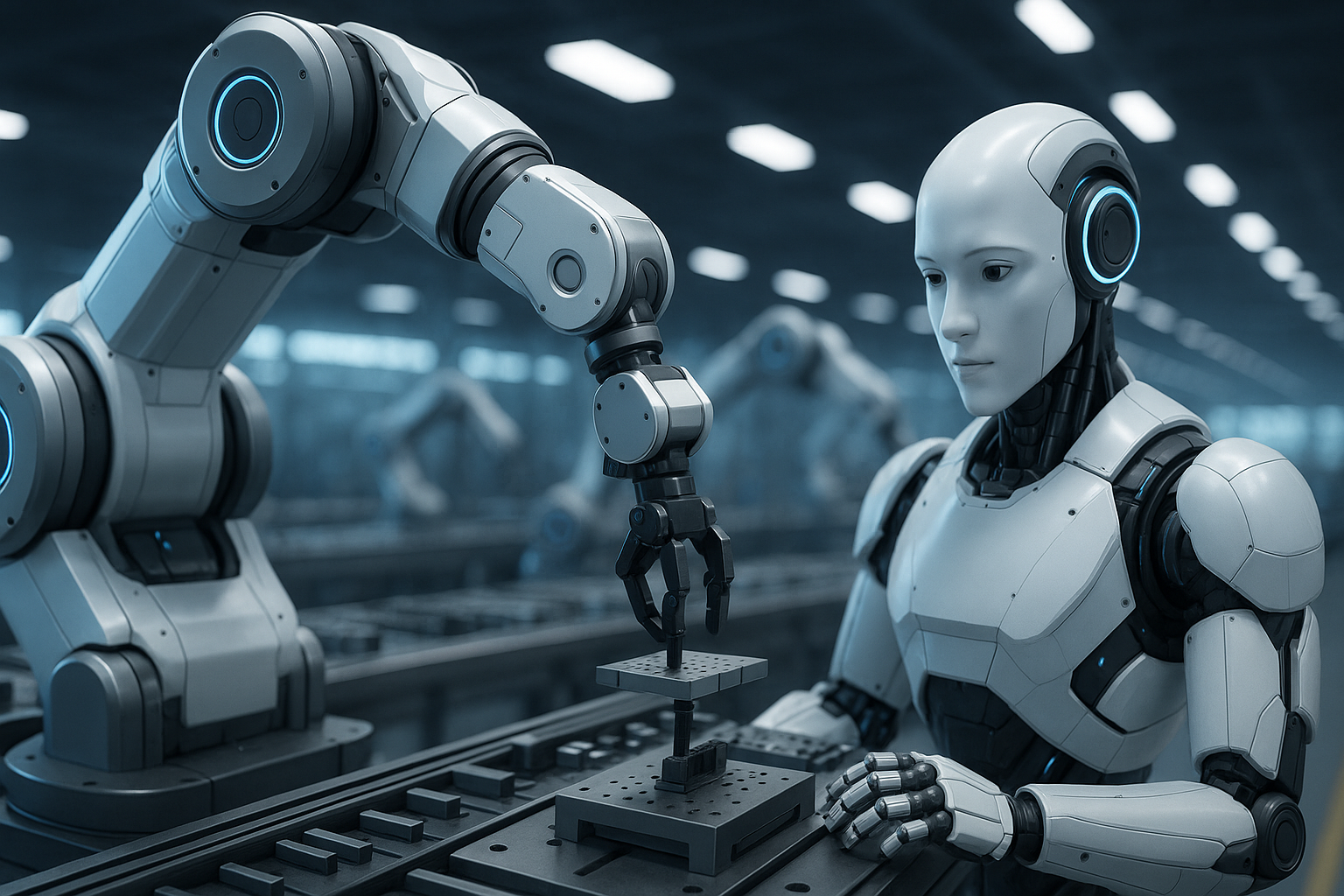
The next generation of factory workers won’t be just programmed — they’ll be self-taught. With the rise of self-learning robots, manufacturing is entering a new era of flexibility, speed, and autonomy.
Traditional industrial robots are fast and precise, but rigid. They require extensive reprogramming to handle new tasks, making them inefficient for dynamic production lines. Self-learning robots, however, use reinforcement learning and AI to adapt on the fly. They watch, experiment, and optimize — just like a human apprentice.
These robots can learn from demonstrations or through trial and error, fine-tuning their movements for maximum efficiency. For instance, a robotic arm might initially struggle to grasp a new object, but within hours — or even minutes — it can improve by iterating across thousands of simulations or real-world attempts.
Using cameras and sensors, these bots perceive their environment in 3D, adjusting to changes in part orientation, lighting, or even minor defects. Paired with digital twins and edge computing, they can simulate actions before executing them — reducing downtime and wear.
Factories of the future will be built around this flexibility. Need to shift from assembling cars to producing ventilators? Just upload a new goal and let the robots figure out the rest. They learn quickly, scale easily, and adapt to new tools or workflows without manual intervention.
There are still hurdles: safety protocols, cost, and regulatory approval for critical tasks. But self-learning robotics is moving fast, promising factories that don’t just work — they think.


